

If you have been thinking about vision correction, it is completely normal to ask: Does LASIK hurt?
LASIK eye surgery is one of the most common vision correction procedures in the world, but the idea of having anything done to your eyes can feel confronting. Many patients worry about whether the LASIK procedure is painful, what the laser feels like, and whether recovery will be uncomfortable.
The good news is this: most patients describe LASIK surgery as far less painful than they expected. However, it is also important to be honest. You may not feel pain, but you can experience temporary discomfort, light sensitivity, and a gritty sensation, especially in the first few hours.
Let’s break down exactly what to expect.
Why do people worry about pain with LASIK?
The question “Does LASIK hurt?” usually comes from two fears: 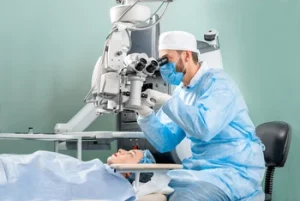
- The fear that eye surgery will hurt is unavoidable
- The fear of feeling pain during surgical procedures involving the eye
And honestly, that makes sense. Your eyes are sensitive, and even minor irritation can feel intense.
LASIK laser eye surgery is a form of refractive surgery designed to reshape the cornea and correct vision problems such as short-sightedness, long-sightedness, and astigmatism. It aims to reduce your dependence on glasses or contact lenses, and for many patients, it can help them achieve clearer vision quickly.
But pain is not the goal, and modern advanced laser technology is designed to make the experience as gentle as possible.
Does LASIK hurt during the procedure?
In most cases, LASIK eye surgery does not hurt during the procedure.
That is because your eye surgeon will apply anaesthetic eye drops (also called numbing drops) before the procedure begins. These anaesthetic eye drops are designed to completely numb your eye.
Most patients do not feel pain, but you may feel:
- Slight pressure
- A strange pushing sensation
- Awareness of touch, without sharp pain
This is the part many patients notice most. It is not usually described as painful, but it can feel unusual.
What about the laser itself?
During the laser-assisted part of LASIK surgery, the laser does not cause pain. The laser is extremely fast and precise, and the reshaping stage typically lasts seconds.
You may notice:
- Bright lights
- Blurry vision
- A smell that some patients describe as mild and strange
But again, most patients describe LASIK eye surgery as far more comfortable than they expected.
What happens step by step (and where discomfort can show up)
Understanding what happens can reduce fear and help you feel more in control.
1. Your eye exam and preparation
Before any refractive surgery, you will have a detailed eye exam. This checks your eye health, measures your cornea, and confirms whether LASIK is suitable.
Not everyone is suitable. For example, thin corneas can affect whether LASIK is safe, and your surgeon may discuss options if a thin flap could increase risk.
2. Anaesthetic eye drops and keeping the eye still
Your surgeon applies anaesthetic eye drops to numb the surface of the eye. You may also hear the term ‘anaesthetic eye drops’ shortened to ‘anaesthetic eye’.
A small device holds the eyelids open. It does not hurt, but it can feel odd.
3. Creating the corneal flap
LASIK involves creating a corneal flap, which is gently lifted so the laser can reshape the tissue underneath.
This part is often where people worry the most, but most patients still do not feel pain. The key sensation is usually slight pressure.
4. Reshaping with advanced technology
Once the flap is lifted, advanced laser technology reshapes the cornea to correct your vision.
Many patients notice their vision blurring for a moment, then clarity returns quickly.
5. Flap repositioning
The flap is placed back into position. It naturally adheres as the eyes heal.
Does laser eye surgery hurt after LASIK?
 This is where the answer becomes more nuanced.
If you are asking, “Does laser eye surgery hurt after the procedure?” the honest answer is: you can experience mild discomfort.
Most patients report that the first few hours are the most noticeable.
Common sensations include:
- Mild irritation
- Gritty sensation (like sand in the eye)
- Watery eyes
- Light sensitivity
- Blurry vision
- Temporary discomfort
This does not mean something has gone wrong. It is part of the healing response.
The first few hours: what it usually feels like
For many patients, the first few hours after surgery feel like:
- A strong urge to blink
- Burning or stinging
- Sensitivity to bright lights
- A feeling that something is in the eye
This is why surgeons often recommend going home and resting with your eyes closed.
How long does the discomfort last?
The good news is that discomfort is usually short-lived.
- The first few hours are typically the most intense
- Many patients feel noticeably better by the next morning
- Mild irritation can come and go for a few days
- Vision can fluctuate for a few weeks
Most patients notice clearer vision quickly, sometimes within the first day. However, your eyes can still be healing underneath, and vision may sharpen gradually over a few weeks.
Why do some people feel more discomfort than others?
Not everyone experiences LASIK the same way.
Some factors that can influence how LASIK feels include:
- Pre-existing dry eye
- Sensitivity to eye drops
- General anxiety around eye surgery
- How your eyes respond to healing
- Individual differences in nerve sensitivity
Also, people who wear contact lenses regularly sometimes notice dryness more strongly after surgery, at least temporarily.
What helps the most after LASIK?
Your surgeon will give you specific instructions, but most recovery plans include:
Eye drops and lubricating drops
Eye drops are essential after LASIK surgery. You will usually be prescribed medicated drops, and you may also use lubricating drops to reduce dryness and support healing.
These help reduce:
- Mild discomfort
- Light sensitivity
- Gritty sensation
- Mild irritation
Avoid rubbing your eyes.
This is one of the most important rules. Avoid rubbing, especially early on, because it can affect the corneal flap while it settles.
Avoid eye makeup
Most surgeons recommend avoiding eye makeup for a short period to reduce infection risk.
When should you worry about pain?
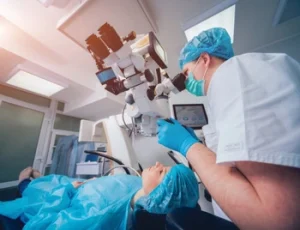 While most patients do well, you should contact your eye surgeon if you experience:
- Severe pain that does not improve
- Sudden worsening of vision
- Increasing redness
- Symptoms that feel unusual or alarming
While mild discomfort is expected, intense pain is not.
Final thoughts: Does LASIK hurt as much as people fear?
So, does LASIK hurt?
For most patients, LASIK eye surgery is tolerated during the procedure because of anaesthetic eye drops and numbing drops. After surgery, you may feel temporary discomfort, mild irritation, and light sensitivity, especially in the first few hours.
Most patients describe the experience as manageable, brief, and worth it, particularly when they notice clearer vision and enjoy life without glasses or contact lenses.
The most important step is choosing the right surgeon, having a thorough eye exam, and following aftercare instructions closely. With an experienced surgeon and modern advanced technology, LASIK can be a surprisingly smooth path toward clearer vision.
Book an appointment with Dr Edward Roufail at (03) 9071 0180 to discuss your symptoms, explore personalised options, and take the first step towards clearer, healthier vision.
Note: Surgical or invasive procedures carry inherent risks. As part of our standard practice, we thoroughly discuss these risks during the consent process before any surgical procedure. Your understanding and comfort are our utmost priority.
References
Pallikaris, I. G., Papatzanaki, M. E., Siganos, D. S., & Tsilimbaris, M. K. (1991). A corneal flap technique for laser in situ keratomileusis. Archives of Ophthalmology, 109(12), 1699-1702. https://pubmed.ncbi.nlm.nih.gov/1841579/
Watson, K. (2018). Eye numbing drops: Uses and side effects. Healthline. https://www.healthline.com/health/eye-numbing-drops
Mayo Clinic Staff. (n.d.). LASIK eye surgery: Overview. Mayo Clinic. https://www.mayoclinic.org/tests-procedures/lasik-eye-surgery/about/pac-20384774
