

Your ophthalmologist mentions a number. Something about pressure. You nod, but you are not entirely sure what it means or why it matters. You are not alone: intraocular pressure is one of the most routinely measured things in eye care, yet most people leave their appointment without a clear picture of what their reading actually tells them.
This page explains what eye pressure is, what a healthy reading looks like, and what options exist when it needs to come down.
Quick Overview
- Intraocular pressure is the pressure created by fluid circulating inside your eye, and keeping elevated intraocular pressure in check protects the optic nerve from damage.
- A reading between 10 and 21 millimetres of mercury is generally considered normal, though elevated eye pressure above 21 mmHg warrants closer attention, and the right target varies from person to person.
- High eye pressure does not always cause symptoms, which is why regular monitoring matters even when your vision feels fine.
- When pressure stays elevated, treatment options include eye drops, laser treatment, and, in more advanced situations, surgery.
Below, we cover how eye pressure works, what drives it up, and what can bring it down.
How Eye Pressure Works
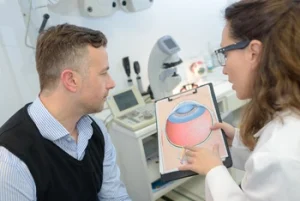 Your eye generates a clear fluid called aqueous humour on a continuous basis. This fluid circulates through the eye’s internal structures, delivering nutrients to areas that have no blood supply of their own, then drains out through a network of tiny channels called the trabecular meshwork. When this drainage system keeps pace with fluid production, the pressure inside the eye stays stable.
When something slows that drainage, fluid accumulates. Pressure climbs. Untreated high eye pressure pushes against the optic nerve at the back of the eye over time. The optic nerve carries visual signals to the brain, and sustained high pressure can cause nerve damage that, if untreated, leads to permanent vision loss.
What Does a Normal Eye Pressure Reading Mean?
Eye pressure is measured in millimetres of mercury (mmHg). A healthy intraocular pressure generally falls between 10 and 21 mmHg, though this range is a statistical average across a population, not a guarantee of safety for every individual.
Some people develop optic nerve damage at pressures well within the normal range. This is called normal tension glaucoma, and it typically reflects an optic nerve that is more sensitive to pressure than average, or reduced blood supply to the nerve. Others carry pressures consistently above 21 mmHg for years without developing any nerve damage at all.
This is why a pressure reading on its own tells only part of the story. Your ophthalmologist also examines the optic nerve directly, assesses your visual field, and considers your personal risk factors before drawing any conclusions from a single number.
When pressure is considered elevated
A pressure reading consistently above 21 mmHg is called ocular hypertension. People with ocular hypertension are sometimes referred to as glaucoma suspects: they are at higher risk of developing glaucoma over time, but many never do. Early treatment at this stage can significantly reduce that risk. A landmark study on pressure-lowering treatment found that patients treated with eye drops were roughly half as likely to develop glaucoma over five years compared to those who went untreated.
What Pushes Eye Pressure Up?
Eye pressure does not rise without a reason. Here are the most common drivers.
The drainage system slows down
In primary open-angle glaucoma, the eye’s drainage angle stays open, but the trabecular meshwork gradually loses efficiency. Fluid backs up slowly, pressure rises quietly, and most people feel nothing. This is the most common form of glaucoma, and it is precisely why screening matters.
Your daily habits
Reducing caffeine intake, eating a balanced diet, and staying active are each linked to modest IOP reductions. Yoga poses with prolonged head-below-heart positions, like headstands, can temporarily raise IOP. These habits support overall eye health but are not a substitute for treatment.
Your family history and personal risk profile
A family history of glaucoma in a parent or sibling raises your personal risk considerably. As age advances, glaucoma increases in prevalence, and other factors, including short-sightedness, corneal thickness, and diabetes, add further risk. Those with multiple risk factors are monitored more closely even when current pressure is normal.
Blood pressure
Low blood pressure can reduce blood flow to the optic nerve, increasing its vulnerability even when IOP reads as normal. Managing vascular health and eye health together matters.
How Eye Pressure Is Checked
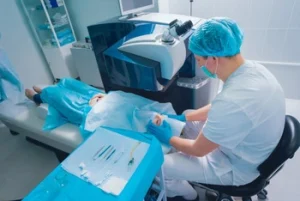 There are several ways to measure eye pressure, and the process takes only a few minutes. The most accurate method involves gently touching the numbed cornea with a small probe. Most people know the air puff version, which works without any contact.
A single reading is rarely enough to act on. Your ophthalmologist builds a picture over time, combining pressure readings with optic nerve imaging and visual field results.
Bringing Elevated Pressure Down
When IOP remains elevated and treatment is indicated, the goal is to lower eye pressure to a level that protects the optic nerve. Several approaches can lower IOP effectively. How that target is reached depends on the individual.
Eye drops
Prescription eye drops are typically the first option considered. Some reduce fluid production inside the eye; others help the trabecular meshwork drain more efficiently. They are used once or twice daily, and the formulation is adjusted based on individual response and tolerability.
Laser treatment
When eye drops alone are not achieving the target, or when a patient cannot tolerate them, laser treatment is an option. A procedure called selective laser trabeculoplasty targets the trabecular meshwork directly to improve drainage and lower IOP. It is performed over two sessions, is well tolerated, and is effective for most patients with open-angle glaucoma.
Surgery
For patients where drops and lasers have not brought pressure down sufficiently, surgical options are available. These create a new drainage route for aqueous humour, allowing pressure to lower more significantly. Surgery is generally considered when other approaches have been exhausted and nerve damage continues to progress.
Book an Eye Pressure Assessment With Us
Many people ask: What does high eye pressure feel like? The honest answer is nothing. There is no pain, no blurry vision in most cases, and no warning sign you can detect yourself. The only way to know where your pressure sits is to have it measured.
Dr Edward Roufail offers comprehensive eye assessments including IOP testing, optic nerve imaging, and visual field analysis. If you have a family history of glaucoma, have been told your pressure is elevated, or simply have not had your eyes checked recently, a dedicated assessment is the place to start.
Please call us on (03) 9071 0180 or arrange an eye pressure assessment online.
Frequently Asked Questions
Why does my eye pressure change between visits?
IOP is not a fixed number. It naturally fluctuates across the day, typically sitting higher in the morning and lower in the afternoon. Caffeine consumption, physical exertion, time of day, and even the position of your head can all affect a reading. This is why ophthalmologists take multiple measurements over time rather than making decisions based on a single result.
 Can I have glaucoma even if my eye pressure is normal?
 Can I have glaucoma even if my eye pressure is normal?
Yes. Normal tension glaucoma affects people whose IOP falls within the standard range but whose optic nerve is more vulnerable than average. The nerve sustains damage despite pressure that would not be harmful to most eyes. Assessment of the optic nerve directly, not just pressure measurement, is what identifies this type of glaucoma.
Do eye drops for high eye pressure have to be taken forever?
For many patients, yes. Prescription eye drops manage IOP rather than fix the underlying drainage problem, so stopping them typically allows pressure to rise again. Some patients transition to laser treatment, which can reduce or eliminate the need for drops.
At what point does high eye pressure become dangerous?
There is no single threshold. An IOP that requires urgent action in someone with optic nerve damage may only need monitoring in someone with healthy nerves. Risk depends on the combination of pressure level, nerve health, and individual factors.
Note: Surgical or invasive procedures carry inherent risks. As part of our standard practice, we thoroughly discuss these risks during the consent process before any surgical procedure. Your understanding and comfort are our utmost priority.
References
https://www.mayoclinic.org/diseases-conditions/glaucoma/symptoms-causes/syc-20372839
https://www.sciencedirect.com/science/article/pii/S0039625722000388

Maintaining optimal eye health is necessary for overall well-being. However, many people are unsure when to see an ophthalmologist and Read more

If you're tired of wearing glasses or contact lenses every day, it's natural to look into options for long-term vision Read more

If you're exploring ways to enhance your vision, whether due to cataracts or other vision concerns, you may have come Read more

Have you ever woken up and noticed blurry vision in one eye? Or perhaps your vision in one eye suddenly Read more