

The laser part of LASIK is over quickly. The drops are not, and they are the part of the recovery you manage yourself.
Eye drops after LASIK fall into three groups, and each has a separate job on a separate timetable. Two stop within a few weeks. The third is the one you may still be reaching for months later.
Quick Overview
- Antibiotic eye drops guard against infection while the surface of the cornea heals over, and they run for the shortest time of the three.
- Anti-inflammatory drops settle the healing response, and they taper off over several weeks.
- Lubricating drops replace the tears your eyes are not making properly yet, and they run for much longer than the other two.
- Preservative-free formulations suit frequent use, since nothing accumulates on an already sensitive eye.
The sections below cover what each bottle does, why the lubricants matter most, the preservative question, and how to use them.
The three kinds of drops, and what each is for
Antibiotic eye drops come first. Laser surgery leaves a healing surface that is easier for bacteria to colonise, so a short antibiotic course covers that window. It is the shortest of the three, often just the first week, though your surgeon sets the exact course.
The second group of medicated eye drops is anti-inflammatory. Any surgery provokes a healing response, and on the cornea an excessive one can affect the final result, so these drops reduce inflammation while the tissue settles. They taper on a schedule your surgeon sets.
Lubricant drops are the third group, and they work differently from the other two. Instead of treating or preventing anything, they replace moisture on the eye’s surface while your own tear production recovers, which is why they outlast the other two.
Why lubricating drops are the ones you keep using
 The reason comes down to nerves. Creating the corneal flap during LASIK surgery divides nerve fibres running through the cornea, and those fibres carry the signals that trigger tear production and blinking. Until they regrow, your eyes make fewer tears than they should.
Nearly everyone gets some dryness after the procedure, which is why preservative-free artificial tears are recommended for a period afterwards. This is not a complication so much as a predictable stage of LASIK recovery.
An unstable tear film also blurs vision. The tear layer is the first surface light passes through, so when it thins between blinks, clear vision comes and goes with it. A lubricating drop before screen work, reading or driving does more than one taken after.
Dry eye symptoms usually ease as the nerves regenerate over the following months. A small number of patients need lubricants beyond that, and it is worth raising at your follow-up visits instead of putting up with it.
Preservative-free, and why it matters
Most bottled eye drops contain a preservative to stop bacteria growing in the bottle once opened. For occasional use, that is reasonable. For a post-LASIK eye using drops many times a day, the balance shifts.
Preservatives stay on the eye’s surface after the drop has spread, and frequent use means repeated exposure for tissue that is already irritated. Preservative-free versions come in single-use vials or specially designed bottles, and they cost more.
If your eyes sting with a particular product, mention it. Mild burning sensations on instillation happen with some formulations and not others, and switching brands often solves it.
How to use your drops, and what else the early weeks involve
A drop that runs down your cheek is a missed dose, so the technique is worth getting right from the first day.
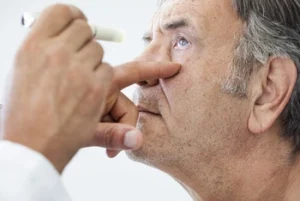 Tilt your head back, pull the lower lid down to form a small pocket, look up, and let one drop fall into it. Do not touch the bottle tip to your eye or lashes. Then keep your eyes closed gently for half a minute or so instead of blinking hard, since blinking makes the drops drain down the tear ducts and away from where they are needed.
Leave a gap of several minutes between different drops, since putting two in together washes the first out before it is absorbed. Where the schedule feels unmanageable, call the clinic for advice.
A few other points cover the same period. Eye shields are usually worn at night in the first few days so you cannot rub your eyes in your sleep. Eye makeup stays away until you are cleared for it, and contact lenses stay out unless your surgeon says otherwise. Take regular breaks from screens, since concentrating reduces blink rate. Attend the follow-up appointment your surgeon arranges, since the drop schedule is reviewed as your cornea settles.
Talk to Dr Edward Roufail about your recovery
Drops are the part of the recovery process post-surgery that patients manage alone at home, and small errors in how they are used are common and easy to correct. Dr Edward Roufail is a vitreoretinal, cataract and refractive surgeon. He checks how the cornea is settling after laser eye surgery, adjusts the drop regimen, and manages dry eyes that outlast the usual window. To arrange an appointment, please call us on (03) 9071 0180.
Frequently Asked Questions
What should I do if I miss a dose of my eye drops after LASIK?
Take it as soon as you remember, unless the next dose is nearly due, in which case skip it and carry on. Do not double up. One missed dose is unlikely to affect your healing, though repeated misses are worth mentioning at your next visit.
Can I use over-the-counter eye drops after LASIK?
For lubrication, generally yes, provided they are preservative-free and your surgeon agrees. Never substitute anything for a prescribed antibiotic or anti-inflammatory drop. Bring the box to your appointment if you are unsure.
Do eye drops cause light sensitivity after LASIK?
The drops are not usually the cause. Light sensitivity in the early days comes from the healing cornea itself, and it settles as the surface recovers. Sunglasses outdoors help in the meantime.
How should I store my eye drops after LASIK?
Check each label, since some need refrigerating and most do not. Keep them capped and out of sunlight. Discard single-use vials after one use, even when liquid remains.
Can I keep using lubricating drops after the prescribed course finishes?
Yes. There is no set point at which you have to stop, and many patients keep a bottle on hand for air travel, air-conditioned offices or dry weather. The medicated bottles are different, and those stop when your surgeon says so.
Any surgical or invasive procedure carries risks. Before proceeding, you should seek a second opinion from an appropriately qualified health practitioner.
References
https://www.mayoclinic.org/tests-procedures/lasik-eye-surgery/in-depth/lasik-surgery/art-20045751?
https://www.hopkinsmedicine.org/wilmer/services/laser-vision-correction/what-to-expect?

Are you considering laser eye surgery to achieve better vision and break free from the chains of glasses and contact Read more
