

A retinal tear is one of the few eye problems where days matter. It usually causes no pain, and the warning signs are easy to dismiss as ordinary floaters.
Retinal tear surgery is usually a laser procedure, and it is done to stop a tear from becoming a detached retina. If flashes of light or a sudden increase in floaters brought you here, this is what treatment involves.
Quick Overview
- A retinal tear forms when the vitreous gel tugs hard enough to open a hole in the thin layer at the back of the eye.
- Retinal laser treatment places small burns around the tear, and those burns create scar tissue that seals the edges down.
- Treated early, a tear can often be dealt with in a single clinic visit.
- Once fluid gets beneath the retina and it detaches, laser is no longer enough, and eye surgery is needed.
The sections below cover what causes a tear, how retinal laser works, and what happens if a detachment has already started.
What is a retinal tear, and why does it need treating?
Your retina is a thin layer of tissue lining the back of the eye, and it turns light into the signals your brain reads as vision. In front of it sits the vitreous, a clear gel-like substance anchored to the retinal surface at various points along the back of the eye.
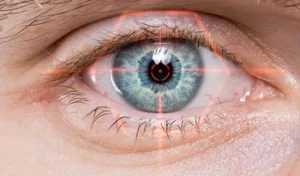 With age, that gel shrinks and the vitreous separates from the retina. Usually it comes away cleanly. Sometimes it stays stuck at one point and pulls hard enough to tear the retina underneath, which is why flashes of light and increased floaters are the symptoms of the early stages.
Fluid then passes through the opening and pools behind the retina, lifting it off the wall of the eye. Left untreated, that becomes a retinal detachment, which brings reduced vision first and permanent vision loss over time. Multiple factors lead to retinal tears, and the risk factors include short-sightedness, family history, eye injury, previous eye surgery and diabetic eye disease. Where a tear crosses a blood vessel, bleeding into the vitreous can happen at the same time.
How does retinal laser treatment work?
The laser emits light that the tissue absorbs and converts to heat. That heat produces small burns around the tear, and the healing process turns each burn into a permanent scar.
The scars are the treatment. The aim is a firm adhesion surrounding the tear that blocks fluid from spreading underneath the retina. Laser surgery is generally more comfortable than freezing treatment, can be done under anaesthetic drops, and is the usual choice to treat retinal tears that have caused symptoms.
The laser beam is delivered at a slit lamp through a special lens placed on the affected eye, with rows of laser spots encircling the tear. Tears near the edge of the retina are sometimes treated with a headset, which gives better access to the far periphery.
What the appointment involves
There is no theatre, no incision and no stitches. Retinal laser happens in a consulting room, and you go home once it is finished.
Eye drops come first: one set opens the pupil wide enough to reach the far edge of the retina, another numbs the surface. You see a bright flash with each laser application. Most patients are treated in a single visit.
Temporary blurry vision typically lasts a few hours until the dilation fades, so organise a driver in advance, because blurred vision rules out driving yourself. Over the following weeks, the scar tissue strengthens, and during that window heavy lifting and strenuous activities are usually put on hold. Follow-up appointments confirm the seal is holding.
Why a tear is treated before it detaches
Sealing a tear stops fluid from getting underneath it. Once the retina has lifted, sealing the tear will not put it back.
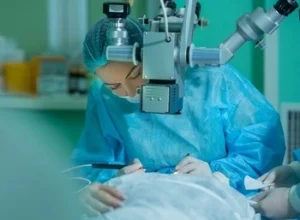 Detachment is treated as a medical emergency. Warning signs include a shower of new floaters, persistent flashes, a shadow spreading in from one side, or vision that has gone distorted. Any of these warrant assessment the same day, so go to an emergency department or call triple zero.
Repair then calls for retinal surgery. A vitrectomy clears out the gel and substitutes a gas bubble, or silicone oil when the retina needs holding for longer. A scleral buckle, a silicone band stitched around the outside of the eye, may be added. The treatment options at that stage are more involved and carry greater potential risks, and lost vision is not always recovered once the retina has detached. Permanent loss of vision remains possible. A tear sealed early avoids all of it, which is why tears are treated as soon as they are found.
Talk to Dr Edward Roufail about your retinal condition
Flashes and floaters are common, and most turn out to be harmless, though only an examination of the peripheral retina can tell the difference. Dr Edward Roufail is a vitreoretinal, cataract and refractive surgeon who examines the peripheral retina, treats tears with laser where they are found, and manages detachment surgery when a tear has progressed. To arrange an appointment, please call us on (03) 9071 0180.
Frequently Asked Questions
Does every retinal tear need to be treated?
No. Treatment depends on several factors, including the type of tear and whether the vitreous is still pulling on it. Older, stable tears are sometimes monitored, because the risk of progression is low. Symptomatic tears, where flashes and floaters have appeared recently, carry the highest risk and are the ones usually treated.
Will floaters go away after retinal laser treatment?
Usually not. Laser seals the tear; it does not remove floaters, which are shadows cast by the vitreous gel and tend to settle out of your line of sight over time. New floaters after treatment need reporting, since they can signal another tear.
Can a retinal tear come back after it has been sealed?
The treated tear stays sealed. What can happen is a new tear forming elsewhere while the vitreous is still separating, so follow-up appointments in the weeks afterwards are part of protecting your overall eye health.
Is retinal laser treatment covered by Medicare?
Retinal laser attracts a Medicare rebate with a valid referral from an optometrist or GP. Out-of-pocket costs vary according to various factors, and your eye surgeon will explain the figures for your situation beforehand.
Can I fly after retinal laser treatment?
Usually yes, since nothing is left inside the eye that expands at altitude. Flying restrictions apply to detachment surgery involving a gas bubble, which is a different procedure entirely.
Any surgical or invasive procedure carries risks. Before proceeding, you should seek a second opinion from an appropriately qualified health practitioner.
References
https://www.betterhealth.vic.gov.au/health/conditionsandtreatments/retinal-detachment
https://www.mayoclinic.org/diseases-conditions/retinal-detachment/diagnosis-treatment/drc-20351348

Maintaining optimal eye health is necessary for overall well-being. However, many people are unsure when to see an ophthalmologist and Read more

If you're tired of wearing glasses or contact lenses every day, it's natural to look into options for long-term vision Read more

If you're exploring ways to enhance your vision, whether due to cataracts or other vision concerns, you may have come Read more

Have you ever woken up and noticed blurry vision in one eye? Or perhaps your vision in one eye suddenly Read more