

Cataract vision refers to changes in eyesight that occur when the eye’s natural lens becomes less clear over time. This condition is commonly associated with ageing, although other eye conditions and risk factors can also contribute to its development. As the lens gradually becomes clouded, light is not focused as effectively, which may lead to blurry vision, glare, or difficulty seeing in low light.
Understanding cataract vision is an important step in recognising when an eye examination may be helpful. With regular eye exams, an eye doctor can detect cataracts early, monitor their progression, and discuss suitable treatment options if needed.
This article will guide you through how cataracts affect vision, the common signs to look for, and what to expect if treatment becomes appropriate.
How Cataracts Develop
Cataracts develop when proteins in the eye’s lens begin to break down and clump together. This change reduces the lens’s clarity and may cause blurry vision, glare, or double vision.
The lens begins as clear, but with age or certain risk factors, it may lose that clarity. When this happens, the lens can no longer focus light as effectively, and your vision may become impaired.
Cataracts often develop slowly and are often linked to ageing. That is why age-related cataracts are so common, although other eye conditions and lifestyle factors may also play a role.
 The Lens Changes
Your eye’s lens sits behind the iris and helps focus light onto the retina. When the lens stays clear, it supports good vision and visual acuity.
When cataracts occur, only a small part of the lens may be affected at first. Over time, however, the cataract grows, and the clouding may become more noticeable.
Early-Stage Cataracts
In the early stages, cataracts may not affect vision enough to interrupt daily life. You might only notice mild blurred vision, a need for brighter light, or a slight change in your contact lens prescription.
Even when early-stage cataracts are subtle, it is still useful to have an eye examination. Early detection helps your eye doctor track the progression of cataracts and determine the right time for cataract treatment.
What Might Increase Risk of Developing Cataracts?
Several risk factors may increase the risk of developing cataracts. These can include diabetes, ageing, eye injury, long-term steroid use, smoking, and prolonged exposure to ultraviolet light.
Protecting your eyes matters. Wearing sunglasses outdoors and attending regular eye examinations may help support long-term eye health.
Some people also have other eye conditions that make cataract vision more noticeable. That is another reason to keep up with routine eye exams, especially if your vision changes gradually.
Common Symptoms of Cataracts
The symptoms of cataracts often include blurry vision, double vision, significant glare, and halos around lights. Some people also notice that colours appear less vivid or that night vision becomes more difficult.
Cataract vision may also cause visual impairment in bright lights. For example, sunlight or headlights may seem harsher than they used to, especially if the lens has become more clouded.
Because symptoms of cataracts can overlap with those of other eye conditions, it is important not to assume that every change in vision is due to cataracts alone. An eye specialist can help identify the cause.
How Are Cataracts Diagnosed?
Cataracts are diagnosed during a comprehensive eye exam. Your eye doctor will examine the lens, assess how light passes through the eye, and evaluate your overall visual function.
An eye examination may include a visual acuity test, pupil dilation, and sometimes other measurements to help detect cataracts and rule out other eye conditions.
Your eye exam may also check whether other eye conditions are contributing to your symptoms. This matters because not every change in vision is caused by cataracts alone.
Types of Cataracts
There are several types of cataract patterns, and the location of the clouding can influence the symptoms you notice. The three main forms are nuclear, cortical, and posterior subcapsular cataracts.
An eye specialist may also discuss childhood cataracts when cataracts are present early in life. While less common, they still require careful assessment and appropriate follow-up.
Nuclear Cataracts
A nuclear cataract forms in the centre of the lens. It often develops slowly and may first change your distance or near vision before causing more obvious cloudiness.
Cortical Cataracts
Cortical cataracts begin at the edges of the lens and move inward over time. They may cause glare, reduced contrast, and changes in how you see around bright lights.
Posterior Subcapsular Cataracts
A posterior subcapsular cataract develops at the back of the lens. It can affect vision more noticeably in bright lights and may be associated with significant glare, especially during reading or night driving.
Childhood Cataracts
Childhood cataracts occur in young people and may be detected during an early eye examination. They can affect vision development, so prompt review by an eye doctor is important.
Cataract Treatment Overview
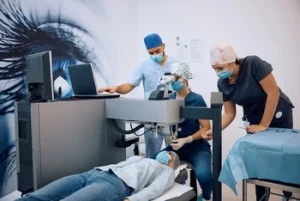 Cataract treatment depends on how much the cataract affects your vision and daily life. In the early stages, your eye specialist may recommend monitoring, updating your glasses, or adjusting your contact lenses.
When cataracts progress, cataract surgery is the primary treatment. This involves removing the clouded lens and replacing it with an artificial lens.
Cataracts treated with surgery are often managed in ways that suit the individual eye and lifestyle needs. Your eye specialist will discuss the timing, lens choice, and what to expect before and after the procedure.
Many successful surgeries are performed each year, but the right approach still depends on your eye health, the type of cataract, and any other eye conditions you may have.
Intraocular Lens Choices
An intraocular lens is the artificial clear lens inserted during cataract surgery. It becomes the new focusing lens inside the eye after cataract removal.
There are different lens options, and the choice depends on your visual needs, eye health, and lifestyle. Your eye doctor may discuss whether a standard lens or a premium lens is more suitable.
Some people may be offered multifocal or extended depth lenses. These are designed to support vision at different distances, although not every patient is a candidate.
Your eye specialist will explain the benefits and limitations of each option so you can make an informed decision.
When to See an Eye Specialist
You should arrange an eye examination if your vision becomes blurry, if you notice halos around lights, or if your glasses no longer seem to work as well as before.
An eye specialist can detect cataracts early, explain whether they are likely to progress, and discuss suitable cataract treatment if needed.
If you already have a diagnosis of cataracts, ongoing review helps track changes in vision and plan for the right time for care. This is especially useful when cataracts progress slowly, and the signs are easy to overlook.
Frequently Asked Questions
Do cataracts always affect both eyes?
Not always. One eye may be affected first, or one eye may be worse than the other. It is also possible for the two eyes to have different types of cataracts or different levels of visual impairment.
Can cataracts come back after surgery?
Cataracts themselves do not return after surgery because the natural lens has been replaced. However, some people may experience a mild clouding of the lens capsule over time, which can be managed by an eye specialist if needed.
Can cataracts cause vision loss?
Yes, cataracts can lead to gradual vision loss if they continue to progress and are not treated. As the eye’s natural lens becomes more clouded, it can become harder to see clearly, especially in bright light or low light.
Conclusion
 Cataract vision can affect how clearly you see, but it does not have to remain unexplained. With a thorough eye examination, your eye specialist can assess the cloudy lens, identify the type of cataract, and discuss the appropriate next steps to achieve clear vision.
If you have noticed blurry vision, double vision, halos around lights, or other symptoms of cataracts, a timely review can help you understand what is happening and what options are available to you.
Changes in vision can be worth checking sooner rather than later, especially when they begin to affect reading, driving, or everyday comfort. Our team is here to assess your symptoms, talk through whether cataracts may be involved, and guide you through the next steps with clear, practical advice.
Contact Dr Edward Roufail on (03) 9071 0180 to arrange a consultation and take a straightforward step towards a clearer understanding of your vision.
Note: Surgical or invasive procedures carry inherent risks. As part of our standard practice, we thoroughly discuss these risks during the consent process before any surgical procedure. Your understanding and comfort are our utmost priority.
References
Healthdirect Australia. (2024, February). Cataract Surgery. Healthdirect. Retrieved May 22, 2026, from https://www.healthdirect.gov.au/cataract-surgery
Lipner, M. (2025, December 30). The Connection Between Diabetes and Cataracts. Verywell Health. Retrieved May 22, 2026, from https://www.verywellhealth.com/diabetes-and-cataracts-6753097
Veazey, K. (2023, February 28). What are some different types of cataract? Medical News Today. Retrieved May 22, 2026, from https://www.medicalnewstoday.com/articles/types-of-cataract
Zimlich, R. (2023, July 5). How Long Does It Take to Go Blind from Cataracts? Healthline. Retrieved May 22, 2026, from https://www.healthline.com/health/eye-health/how-long-does-it-take-to-go-blind-from-cataracts

Maintaining a good quality of vision is crucial for a high quality of life at any age. However, as adults Read more

Cataracts are a common eye condition, especially as we age, but they can affect people of all ages and walks Read more

Cataracts are a common eye condition that gradually affects your ability to see clearly. While they are a natural part Read more

Cataract surgery is one of the most well-known surgical procedures in Australia, and it can significantly improve your distance vision Read more